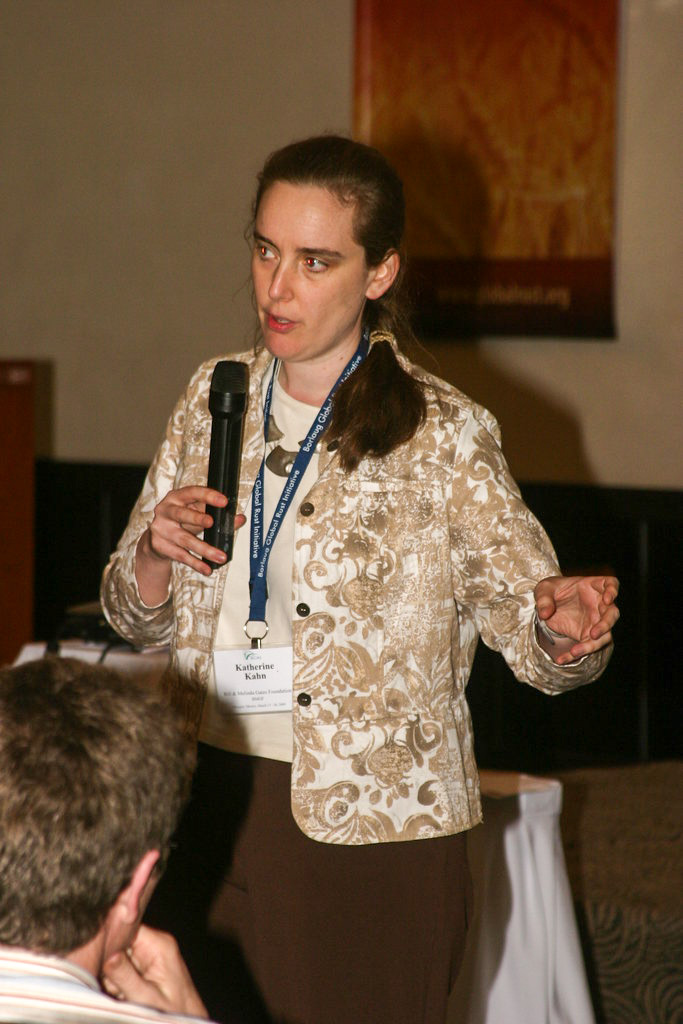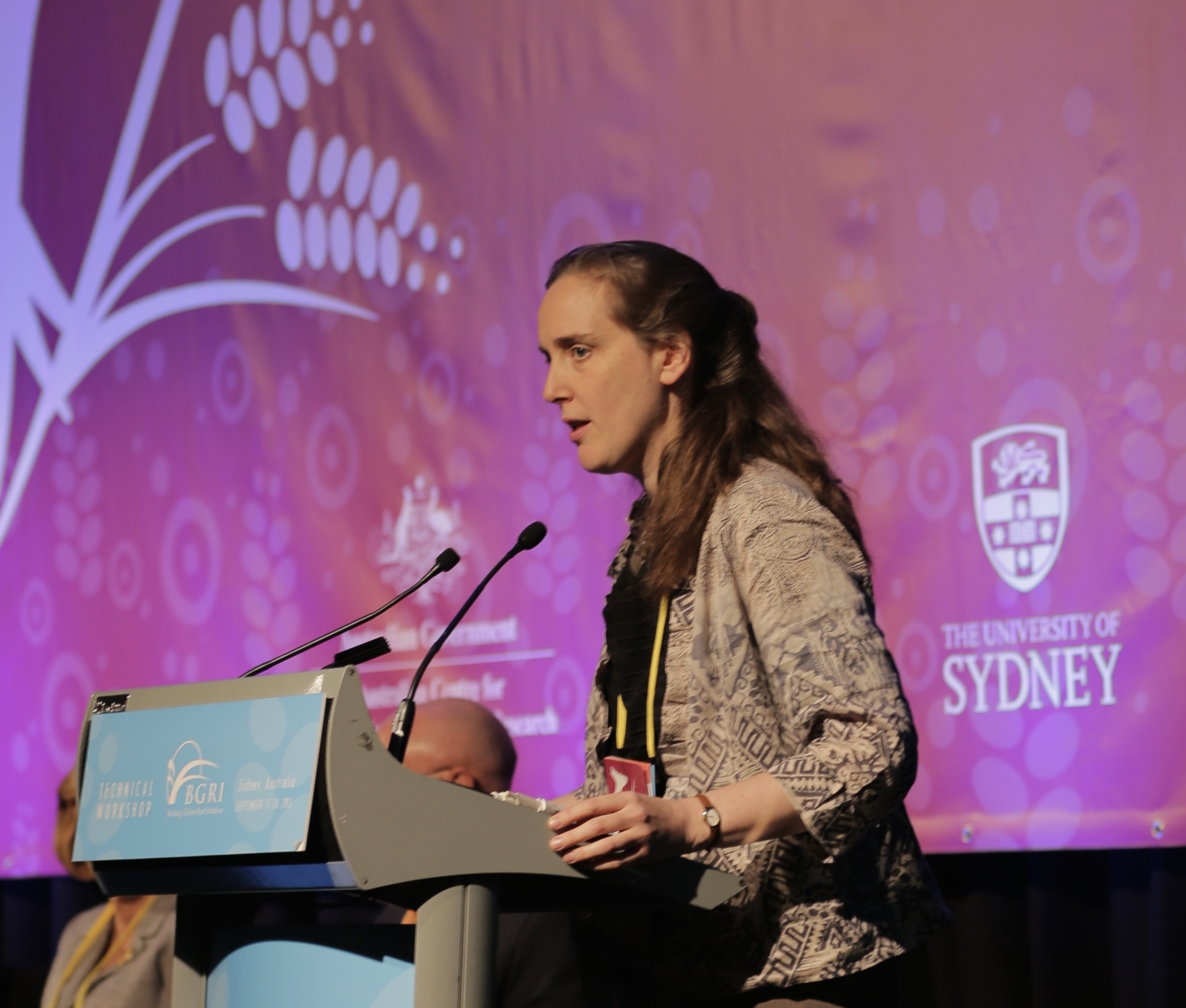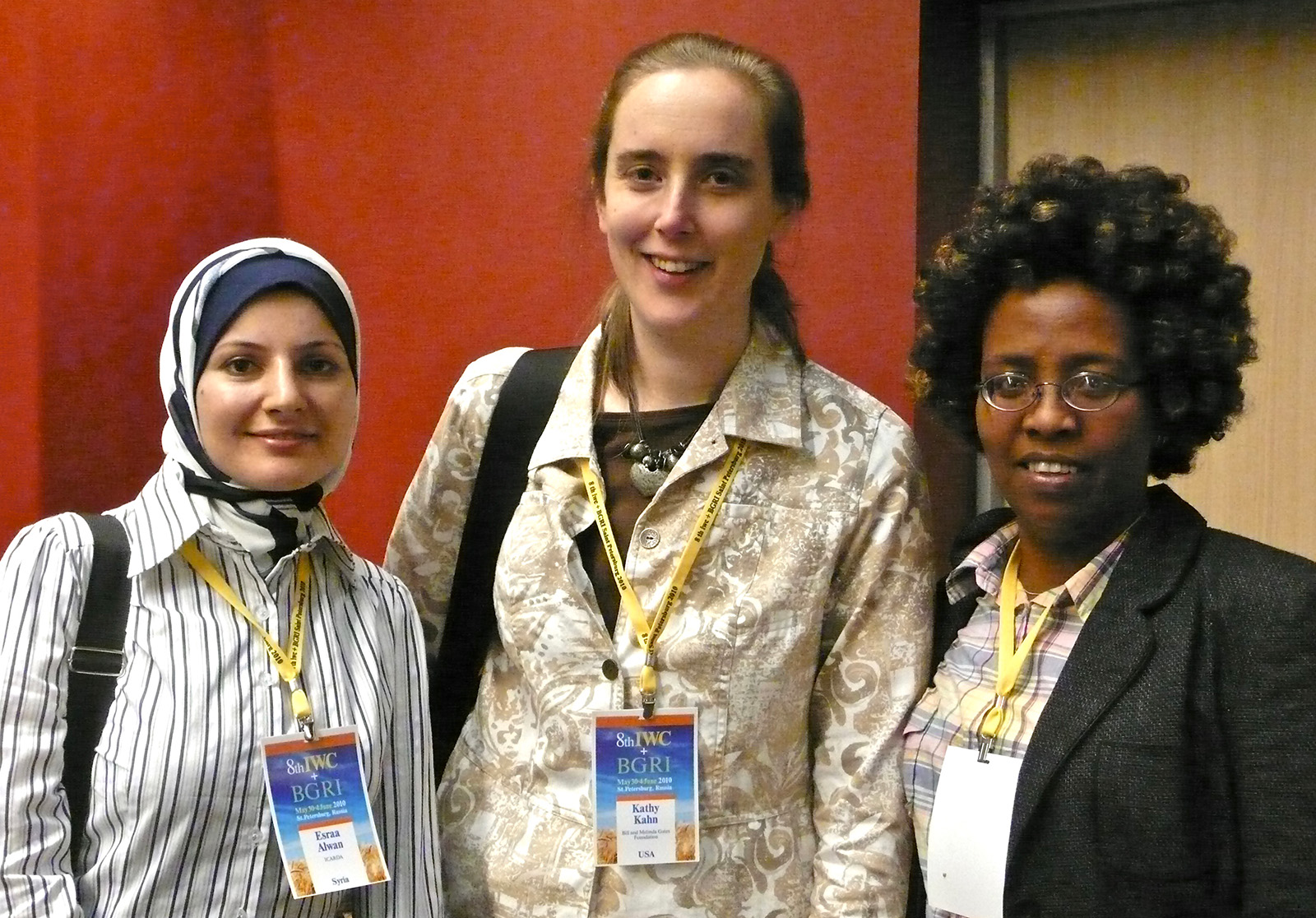
The Borlaug Global Rust Initiative (BGRI) community is remembering Kathy Kahn, a scientist, program officer and partner whose work strengthened the global response to wheat rust diseases and increased sustainable productivity for smallholder wheat farmers around the globe. From 2008 to 2024, she was an effective and powerful advocate for the BGRI. A changemaker in the arena of agricultural research for development, Kathy passed away June 1.
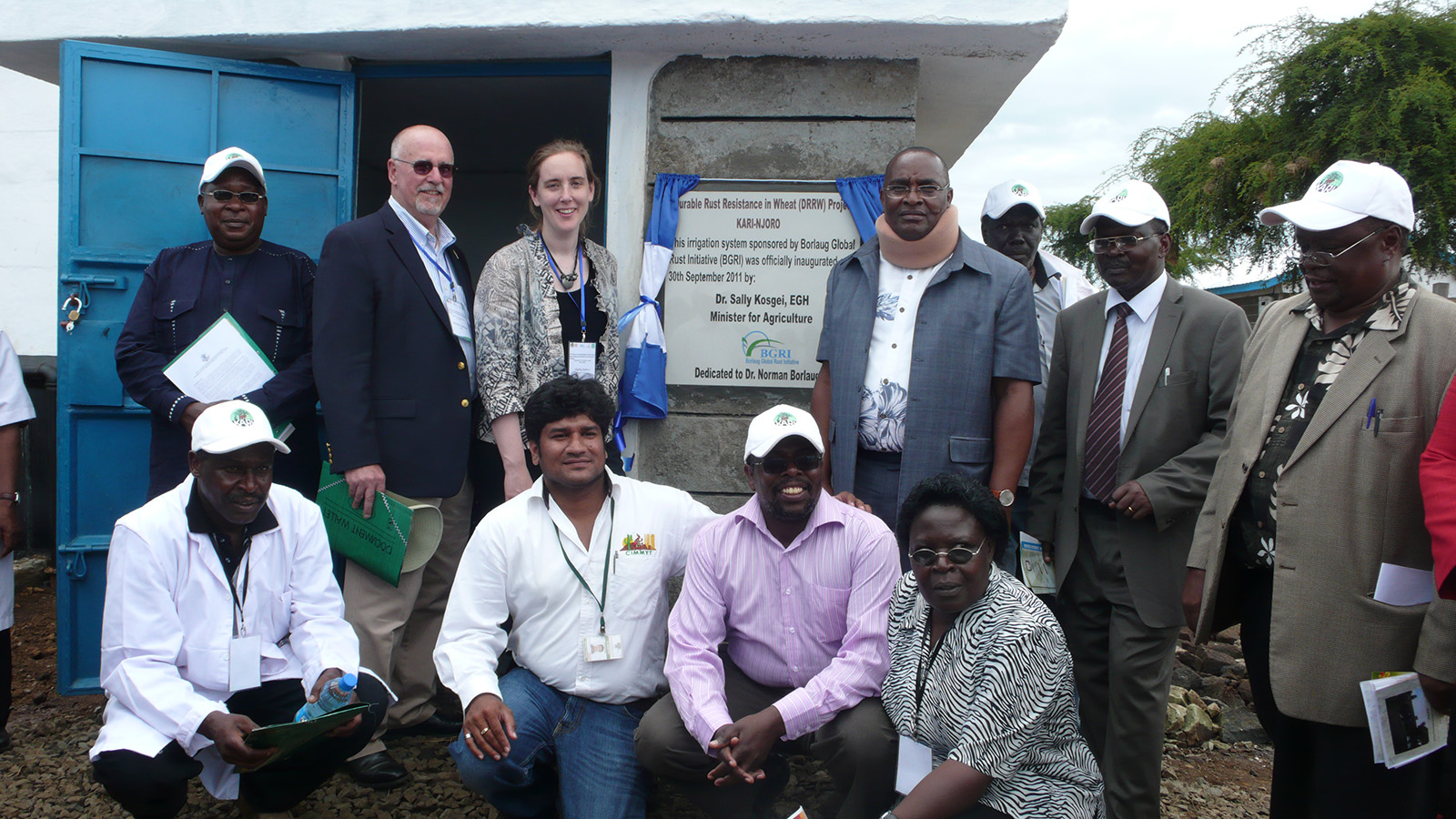
Kathy served as a senior program officer at the Bill & Melinda Gates Foundation where she managed grants focused on crop improvement and discovery research for smallholder farmers in sub-Saharan Africa and South Asia. She joined the foundation in 2007. The Durable Rust Resistance in Wheat (DRRW) project with the BGRI was the first grant she managed at the Gates Foundation.
The BGRI placed Kathy at the center of a global response to one of the most serious threats to wheat production: Ug99, a new race of stem rust was overcoming long-standing sources of resistance and renewing concern about global wheat rust epidemics. The stakes were incredibly high as wheat was, and remains, a critical crop for food security globally. Rust diseases can spread and evolve quickly, threatening food security and livelihoods across international borders.
Kathy understood the urgency of the Ug99 threat and the opportunity to focus global investment on creating lasting partnerships among wheat researchers and wheat-dependent countries to meet this and future threats. The challenges of rust affect farmers deeply, creating hunger and food insecurity in low-income countries particularly — problems she knew the scientific community had the knowledge to confront. What was needed was sustained support, coordination, collaboration and a shared commitment to create and move new rust-resistant varieties of wheat from national and international labs and research centers into farmers’ fields.
“In many developing countries, like in East Africa, three-quarters of the population are small, farming families. If you want to help create new pathways out of poverty for farmers and their families, then agricultural development is a very proven and important mechanism to do that,” she said in an interview back in 2011. “For crops where there’s a strong private industry, like maize and corn, then you see a lot of private investments. For a crop like wheat where farmers tend to save their own seed, and most of the varieties being developed right now are coming out of the public sector. Agricultural investments by governments are a very important thing.”
Contribute a remembrance
The BGRI is collecting memories and reflections from colleagues, partners and friends who knew Kathy Kahn. Submissions may be used in future BGRI communications as we honor her contributions to wheat research, agricultural development and the global partnerships she helped strengthen.
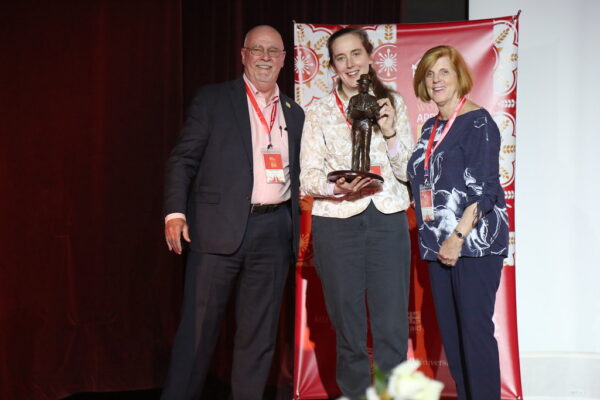
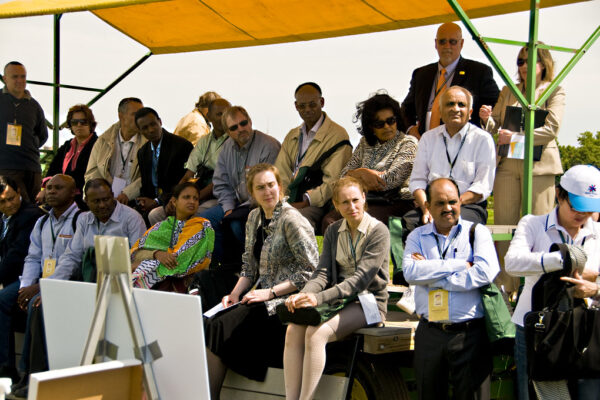
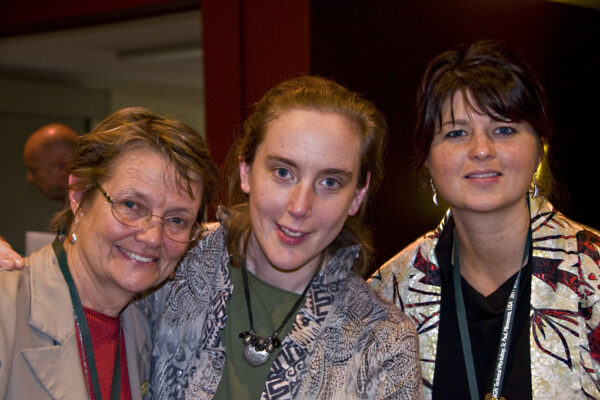
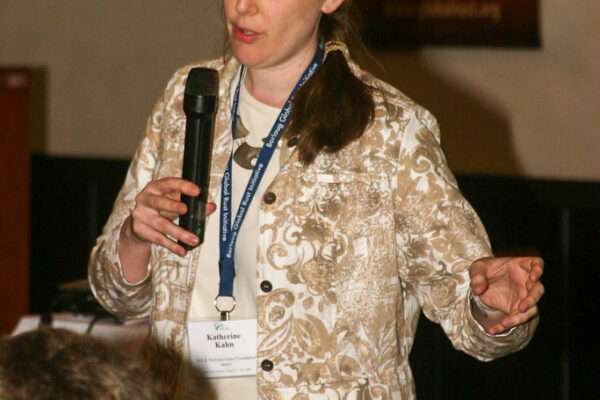
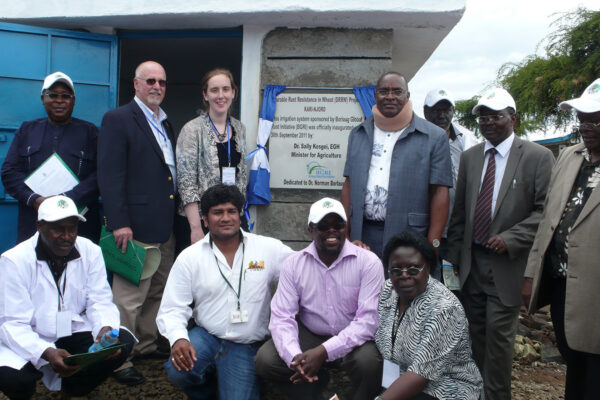
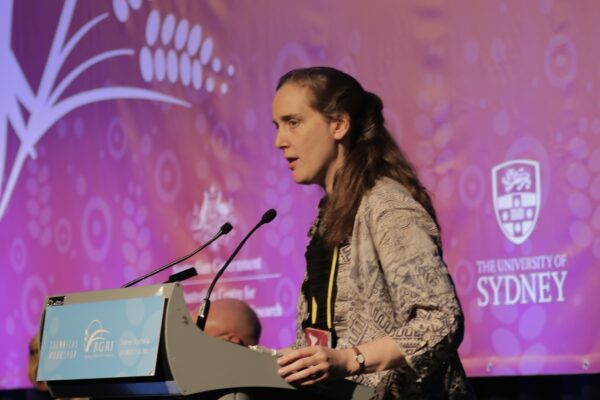
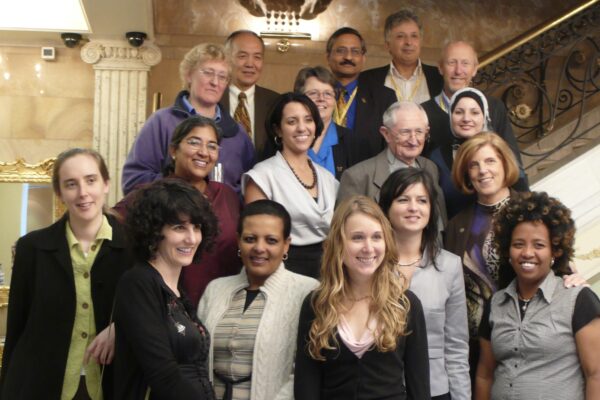
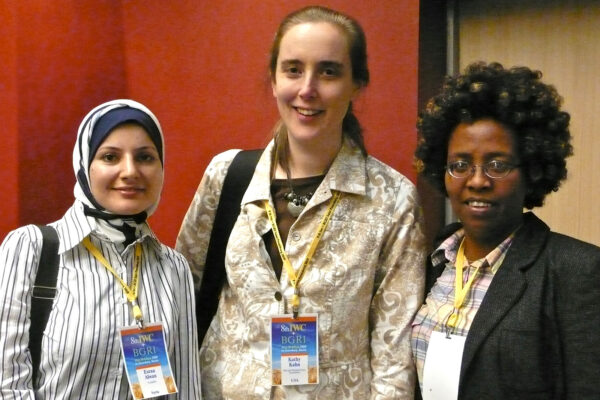
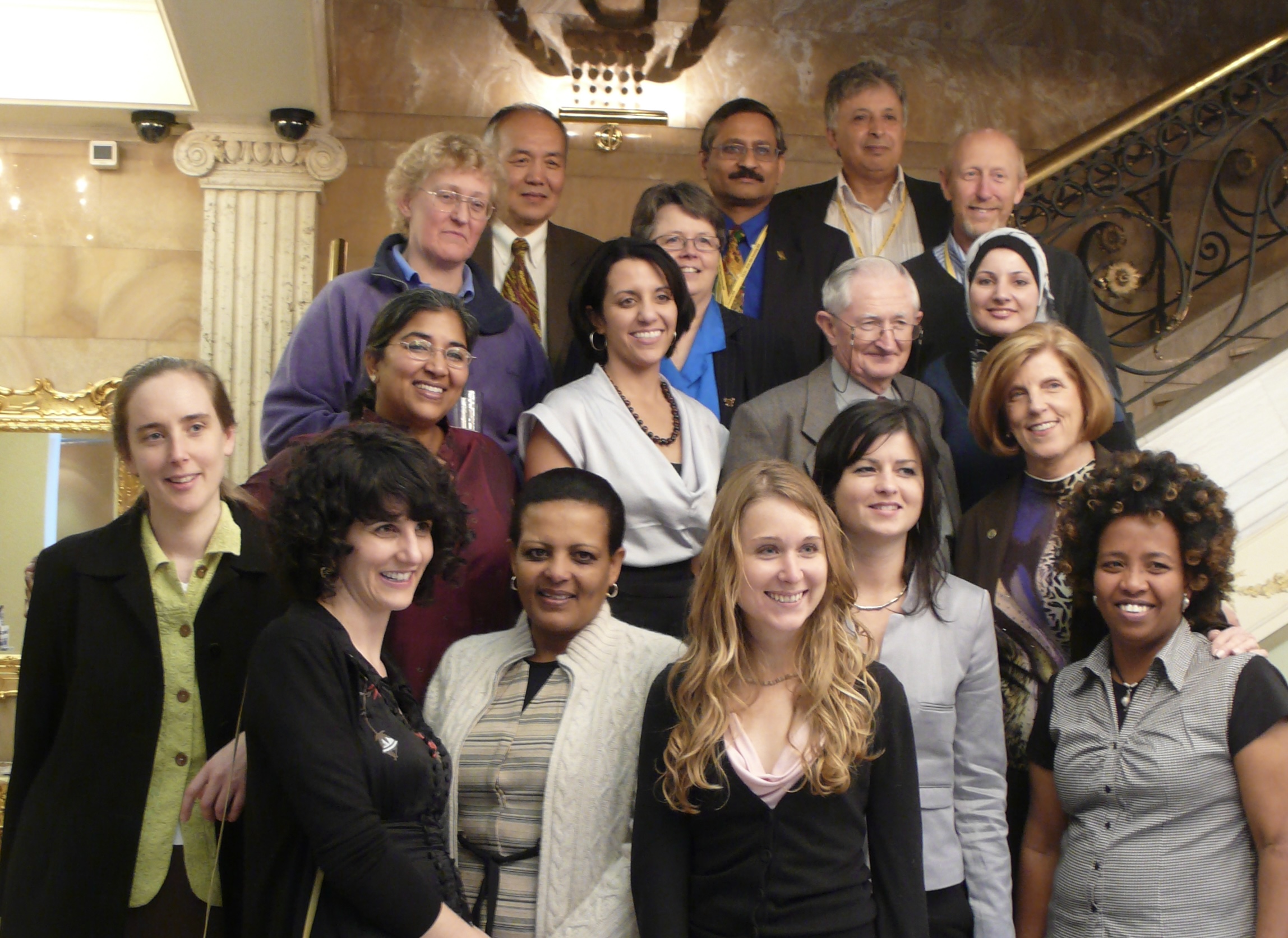
In supporting work that connected scientific discovery with practical action for farmers, Kathy helped shape the BGRI into a model of international collaboration. She believed deeply in investing in leadership and professional development, and in building a stronger research community. She worked to expand opportunities for women, early-career scientists and in-country partners who were closest to the farmers. A valued mentor for many, Kathy understood that lasting solutions depend not only on scientific tools, but on educational and training opportunities for the people and institutions using them.
For Kathy, Ethiopia was one of the clearest expressions — and ultimate success stories — of that vision. The country was central to the global response to wheat rust, with many smallholder farmers dependent on wheat facing the direct threat of disease. Since Ethiopia was near the epicenter of disease pressure from Ug99 as well as stem, stripe and leaf rust, the Ethiopian Institute for Agricultural Research (EIAR) hosted wheat trials for new varieties coming from CIMMYT and wheat-dependent countries across East Africa, South Asia, and the Middle East. Kathy helped expand capacity for variety trials in Ethiopia, recognizing both the scientific challenges and the human stakes.
In Dr. Bedada Girma Buta, technical coordinator for the BGRI project in Ethiopia, Kathy found a dedicated partner who shared her commitment. Their working relationship brought together all the elements that made the BGRI powerful: rigorous science, national leadership, extension and a clear sense of purpose in disseminating seed of new multiple-resistant wheat varieties, while increasing knowledge and involvement among farmers often leery of the new seeds. Together with colleagues in Ethiopia and across the international wheat community, she helped build a bridge between researchers and the smallholder farmers who needed the new resistant varieties most.
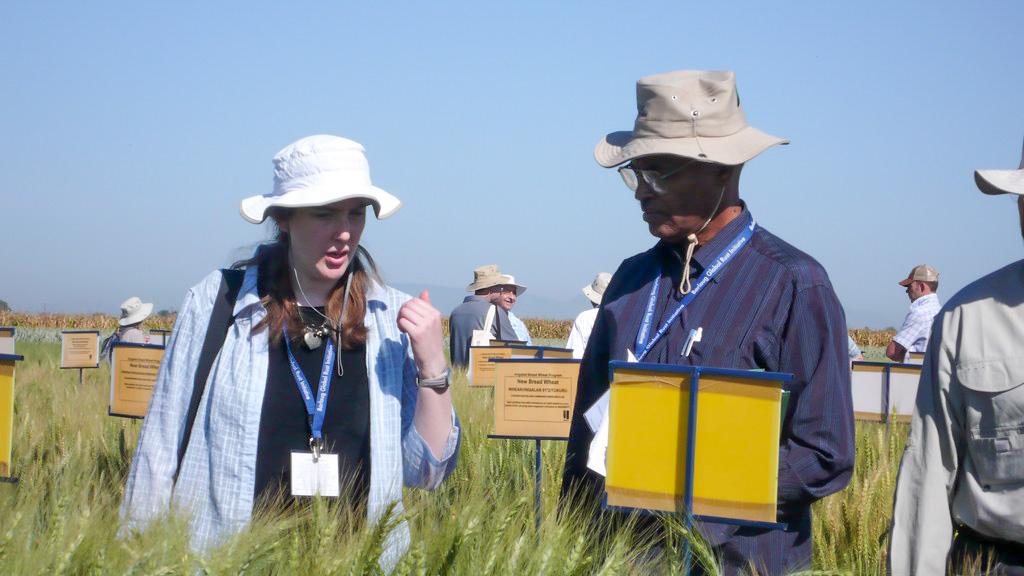
Kathy Kahn and Bedada Girma at the field day of the BGRI 2009 Technical Workshop in Cuidad Obregón, Mexico, on 19 March 2009.
Under the DRRW and the subsequent Delivering Genetic Gain in Wheat (DGGW) initiative, Kathy supported a network connecting researchers, pathologists, breeders, surveillance specialists, field-level advisors and farmers. Scientists and pathologists worked to identify sources of rust resistance. Breeders in national and international agricultural research programs helped move resistance into new varieties, and test and move new wheat lines adapted by, for and into the countries where farmers could adopt them.
Kathy’s advocacy for the BGRI project within the Gates Foundation and her leadership with Ronnie Coffman at Cornell University in spearheading the DRRW and DGGW initiatives, helped bring experts from more than 22 institutional partners across the wheat community into a shared global effort. The BGRI wheat community continues in partnership to this day as wheat diseases continue to evolve and researchers and farmers are forced to respond to global threats.
Kathy often pointed to the importance of a common mission. She valued broad collaboration and believed it should always have a clear and useful purpose. The work had to be focused, scientifically credible and relevant to the farmers facing rust in their fields. Wheat rust gave the community a clear and urgent problem to organize around.That shared threat helped bring people and institutions together that might otherwise have worked separately. Her view of collaboration and cooperation was inclusive and rigorous: bring people in, respect their expertise, listen to them, provide funding, give credit broadly and keep the work focused on farmers.
The mission extended beyond one country or one disease. Plant diseases do not respect international borders. Protecting wheat in one region helps protect wheat in another. For Kathy, international cooperation was valuable and necessary. Kathy saw crop improvement as part of the world’s larger responsibility to support food security, farmer livelihoods and resilience in the face of disease and climate pressure.
Kathy always looked ahead with optimism. New scientific tools were expanding what researchers could understand about plants, disease resistance, heat tolerance, water stress and crop adaptation. New technologies could help breeders and pathologists identify new sources of resistance and develop crops better suited to changing conditions. She conferred often with the people behind the science. A distinguished researcher in her own right, many in the BGRI community were inspired by her scientific acumen, commitment and compassion.
For the BGRI community, Kathy’s enduring legacy is her selfless support and leadership for a global research effort that was scientific, practical and deeply human. She valued rigorous research, collaboration, and national and international agricultural expertise. She could speak in depth with wheat breeders and pathologists about resistance, surveillance and crop improvement, but never lost sight of the farmers and communities the new varieties were meant to serve.
As wheat diseases continue to evolve, the need for global commitment and cooperation remains. Kathy’s legacy lives on in the partnerships she helped strengthen, the scientists she supported and their ongoing work to protect wheat harvests for smallholder farmers around the world.