2026 Translational Team Grant Award
Principal Investigator
Israel Oluwatomide Akinlabi
PhD Student, Plant Science
South Dakota State University
Research Partners
Zerihun Tadesse
Wheat Breeder
CIMMYT-Kenya
Zennah Kosgey
Plant Pathologist
KALRO Njoro
Abstract
Wheat stem rust threatens wheat production across USA, Africa and major wheat-growing regions of the globe, while the fungus continues to evolve and overcome resistance deployed in wheat varieties. Two decades of CIMMYT breeding and disease testing in Kenya contain valuable evidence of which wheat lines have remained resistant, but these records have not been analyzed together. Working with CIMMYT-Kenya and the Kenya Agricultural and Livestock Research Organization (KALRO) at Njoro, I am integrating these historical records to identify wheat lines with consistently strong resistance. The most promising lines will then be genetically characterized and evaluated against stem rust to determine they carry known or potentially new sources of resistance. The project will deliver prioritized resistance sources and associated genetic markers that breeders can use to select parents, track resistance, and combine complementary resistance sources in future wheat varieties.
About Israel Oluwatomide Akinlabi
Israel Akinlabi is a Ph.D. student in the Department of Agronomy, Horticulture and Plant Science at South Dakota State University (SDSU), where he studies how wheat and barley resist stem rust at the genetic and molecular levels. He was trained in Nigeria, Poland, and Germany before coming to SDSU, USA. His research combines plant-pathogen interactions, functional genomics, molecular genetics, and bioinformatics to understand how cereals recognize and defend against rust diseases. Through his 2026 Global Wheat Health Alliance Seed Grant, he will work with CIMMYT-Kenya and KALRO-Njoro to analyze two decades of stem rust field records alongside genotyping data, identifying resistance that has held up over time and developing markers breeders can use. He is interested in research that translates discoveries in plant immunity into practical tools for breeders, and in building international partnerships that make durable cereal disease resistance possible.
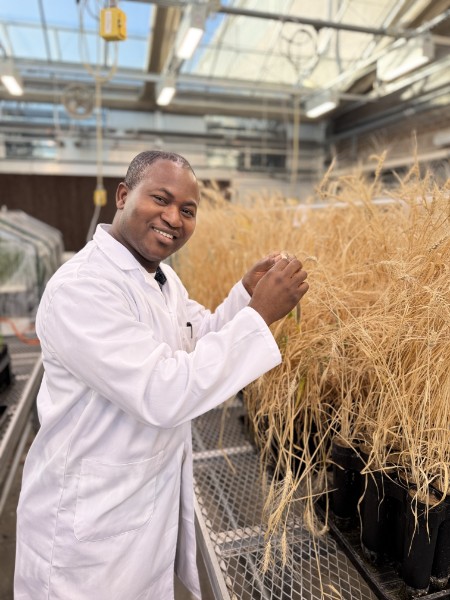
“Wheat feeds billions of people globally, and stem rust keeps evolving. Resistance that works today can be overcome as the pathogen changes. What excites me is turning two decades of field data into genetic tools breeders can use to stay ahead of rust. This grant brings SDSU, CIMMYT, and KALRO together to connect field performance, genetics, and breeding, so that wheat varieties with durable resistance reach farmers.”
Israel Oluwatomide Akinlabi
Connect with Israel